

May’s Plant of the Month: Aquatic Plants
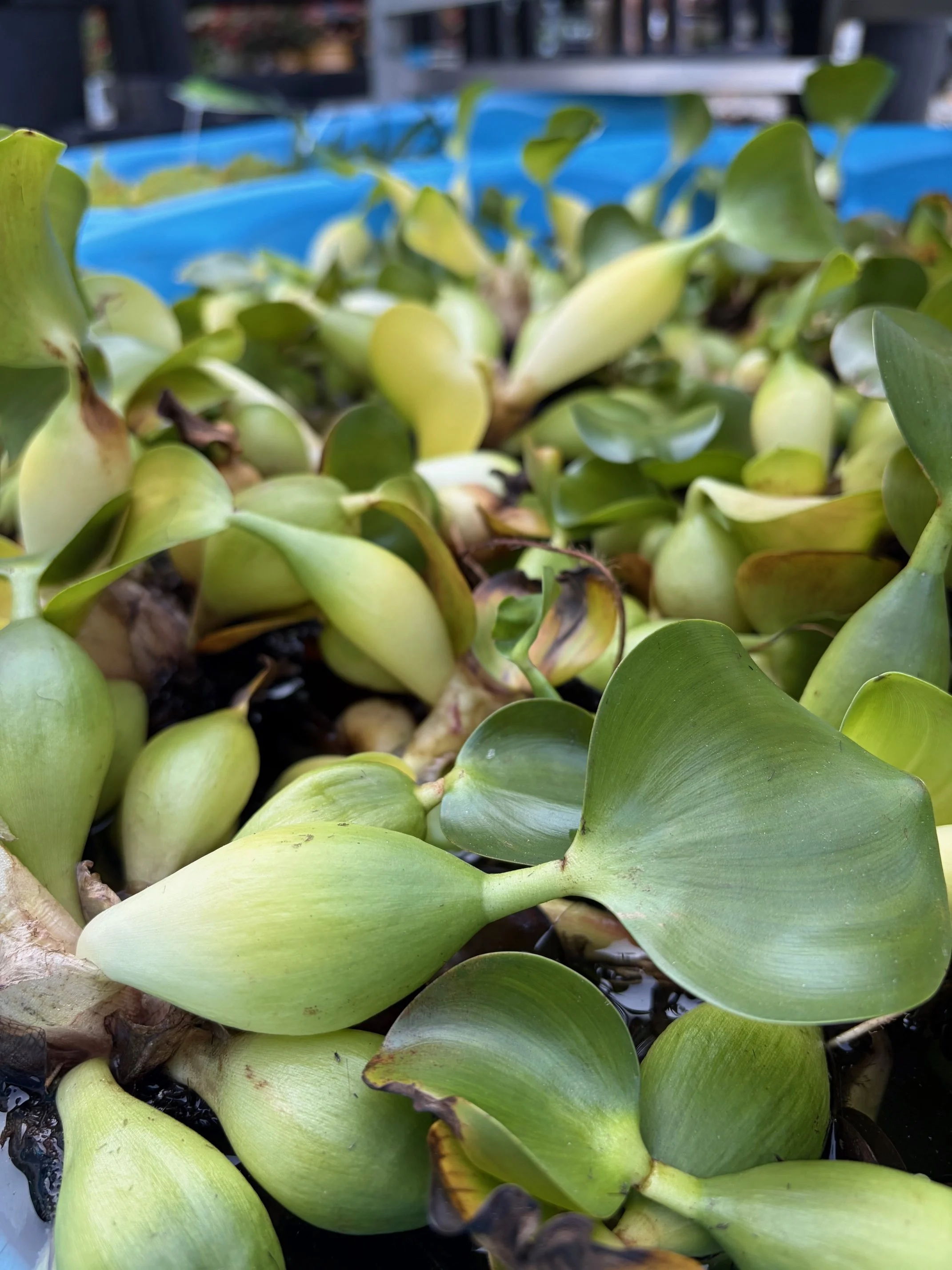
Spring is here and aquatic and marginal plants bring ecological value to ponds, water features, and even container gardens. What’s the difference between aquatic and marginal, you ask? “Marginal” refers to the plants that grow along the edges of water features (like ponds, streams and wetlands) while aquatic refers to plants that grow directly within the water feature. Marginal plants are not fully submerged but also not dry land plants either. they’re the in-betweeners! What’s this mean in practice? Plant your marginal plants in shallow water (0-6’’) or very wet soil. Use them to help soften pond edges, provide habitat for wildlife like frogs and insects, and improve water quality by absorbing excess nutrients. From bold tropicals to native pollinator magnets, here’s a quick-reference guide to some standout selections we’re offering in both aquatic and marginal categories!
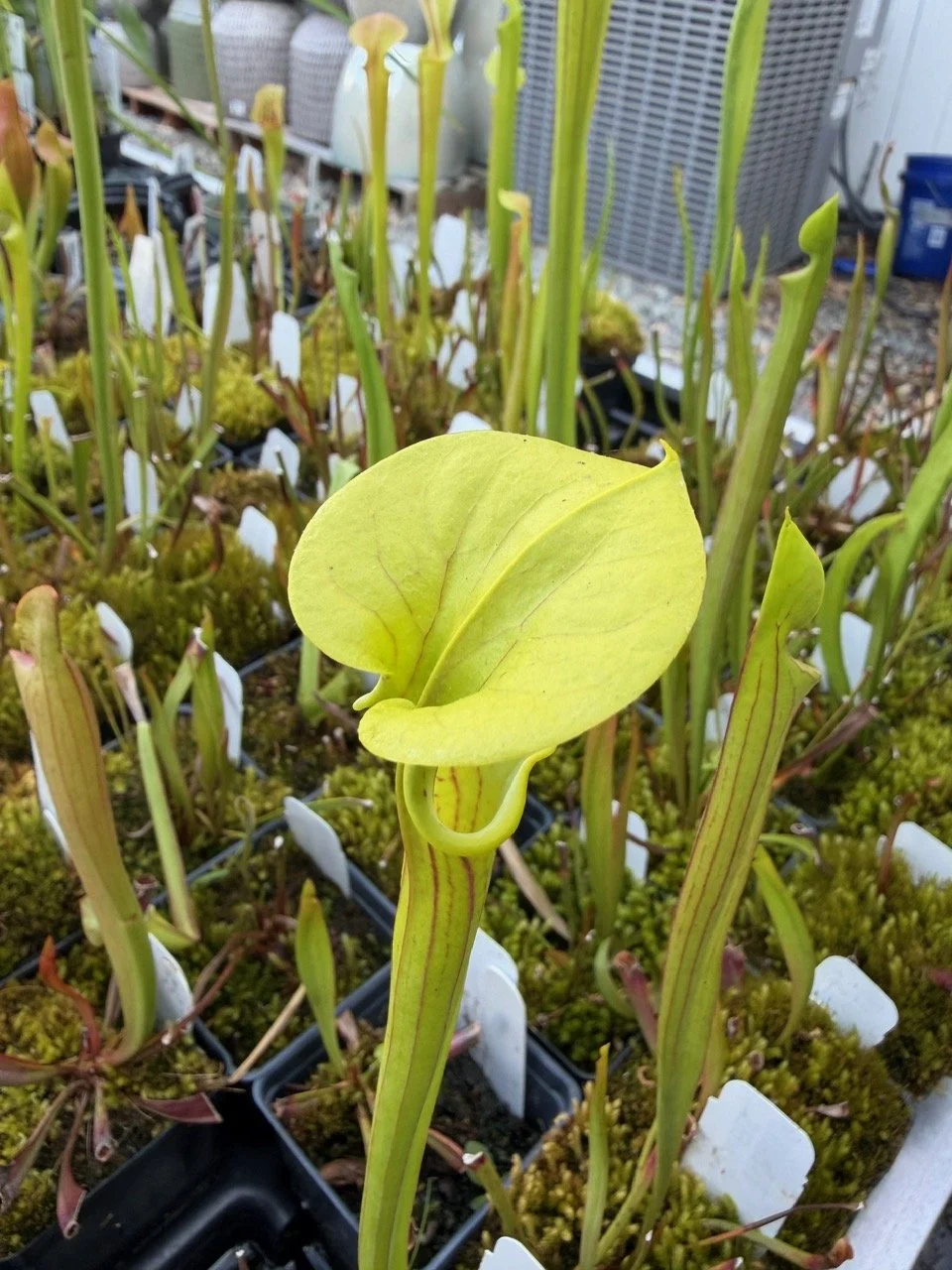
Pitcher Plant (Sarracenia spp.)
Type: Carnivorous bog perennial
Height: 1–3 ft
Light: Full sun
Water: Constantly wet, acidic soil
Highlights: Insect-trapping pitchers; native curiosity
Best Use: Bog gardens, educational displays
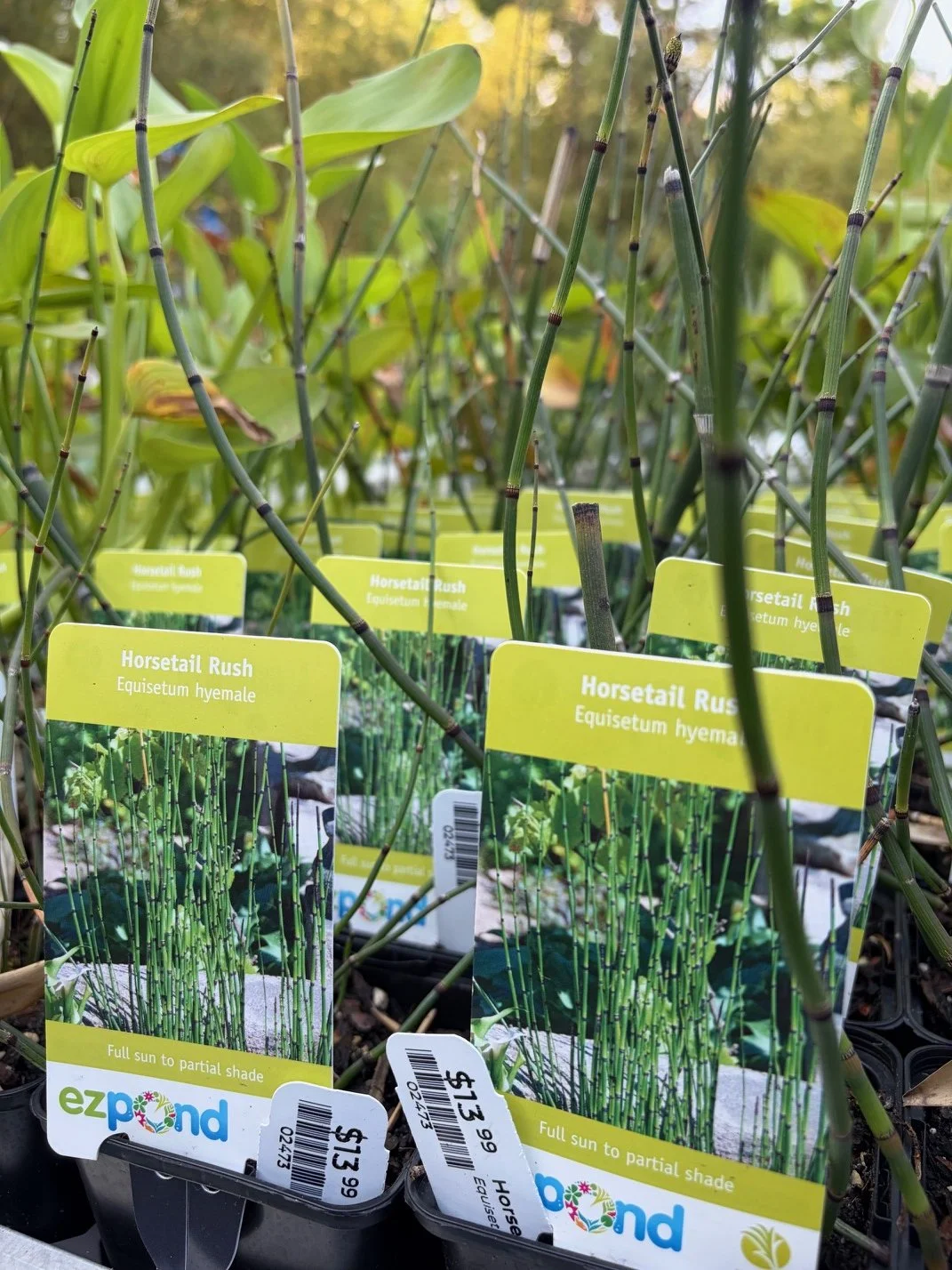
Equisetum hyemale (Horsetail Rush)
Type: Evergreen marginal
Height: 3–4 ft
Light: Sun to shade
Water: Wet soil to shallow water
Highlights: Bold vertical lines; architectural
Best Use: Modern designs, containers (can spread aggressively)
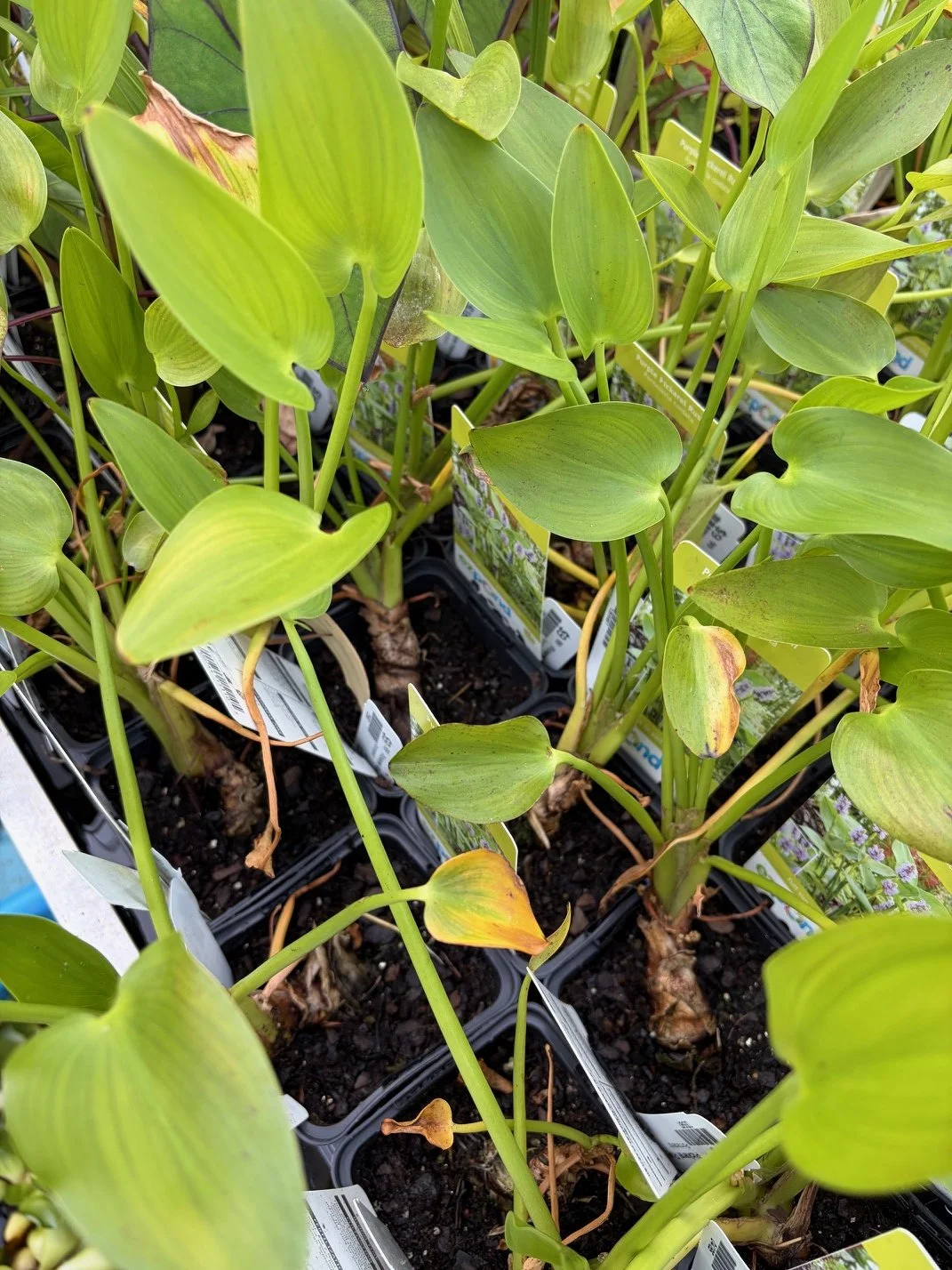
Pontederia cordata (Purple Pickerel Rush)
Type: Native marginal perennial
Height: 2–4 ft
Light: Full sun
Water: Shallow water
Highlights: Purple flower spikes; pollinator magnet
Best Use: Wildlife ponds, natural plantings
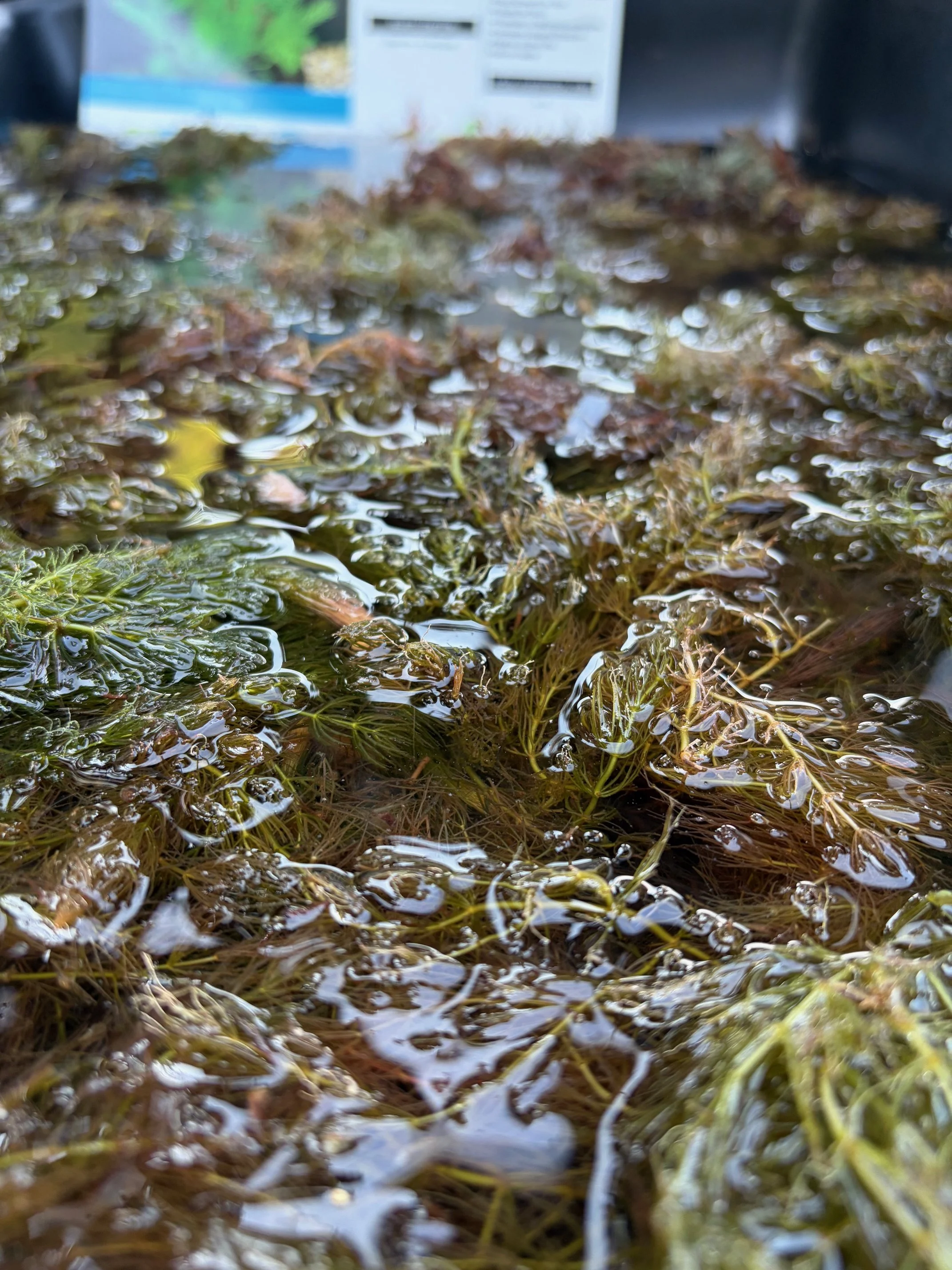
Ceratophyllum demersum (Hornwort/Coontail)
Type: Submerged aquatic perennial
Height: Stems 1–10+ ft long
Light: Full sun to part shade
Water Needs: Fully submerged; thrives in still or slow-moving water, adaptable to a range of depths
Highlights: Excellent oxygenator, helps suppress algae by absorbing excess nutrients, provides shelter for fish and aquatic life, extremely hardy and fast-growing
Best Uses: Natural ponds and wildlife habitats, aquariums, algae control, background filler for submerged plantings
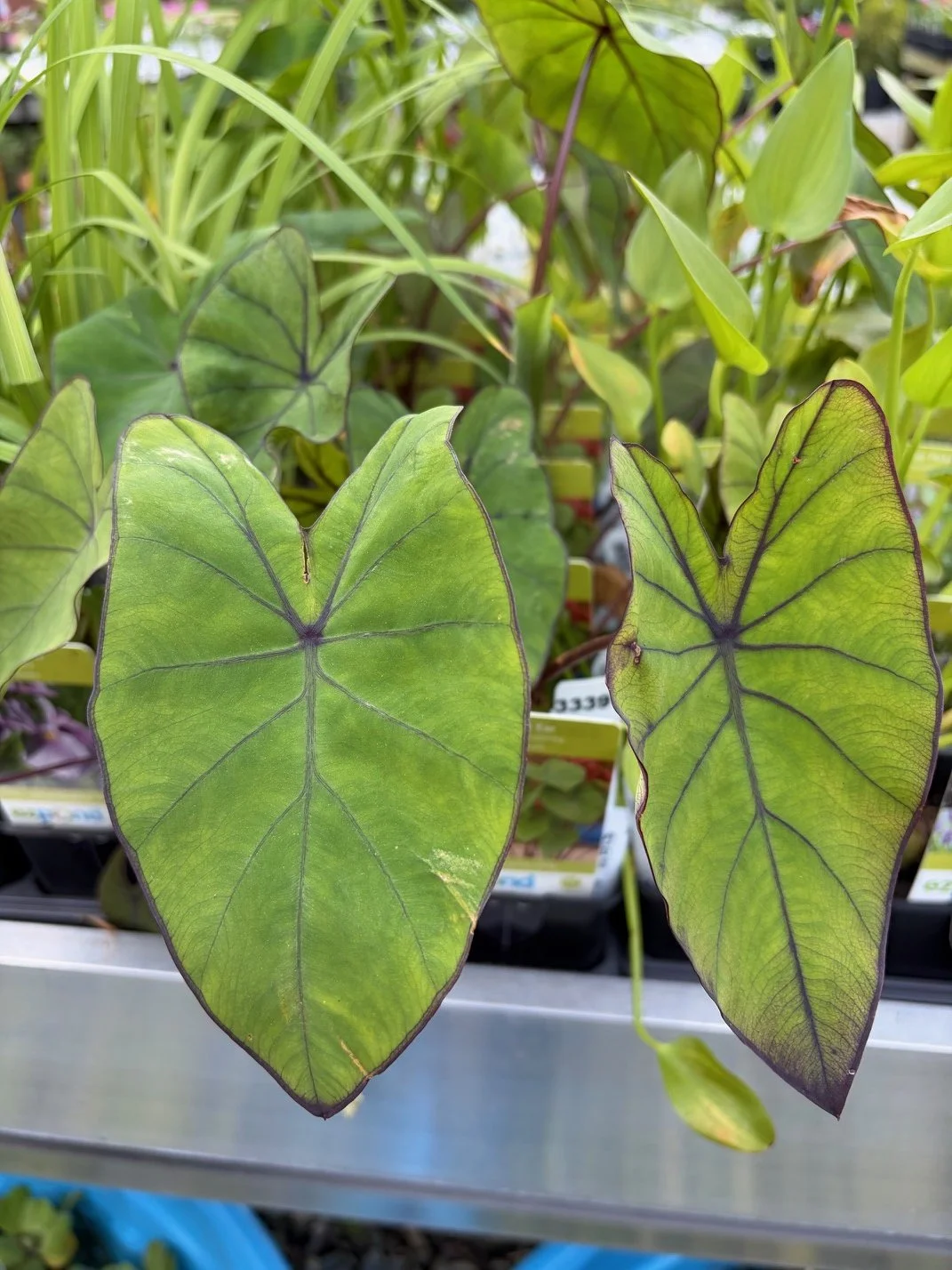
Colocasia esculenta ‘Blue Hawaii’ (Elephant Ear)
Type: Tropical perennial
Height: 3–5 ft
Light: Sun to part sun
Water: Moist soil to shallow water
Highlights: Blue-toned foliage; bold tropical look
Best Use: Statement plant for ponds and containers
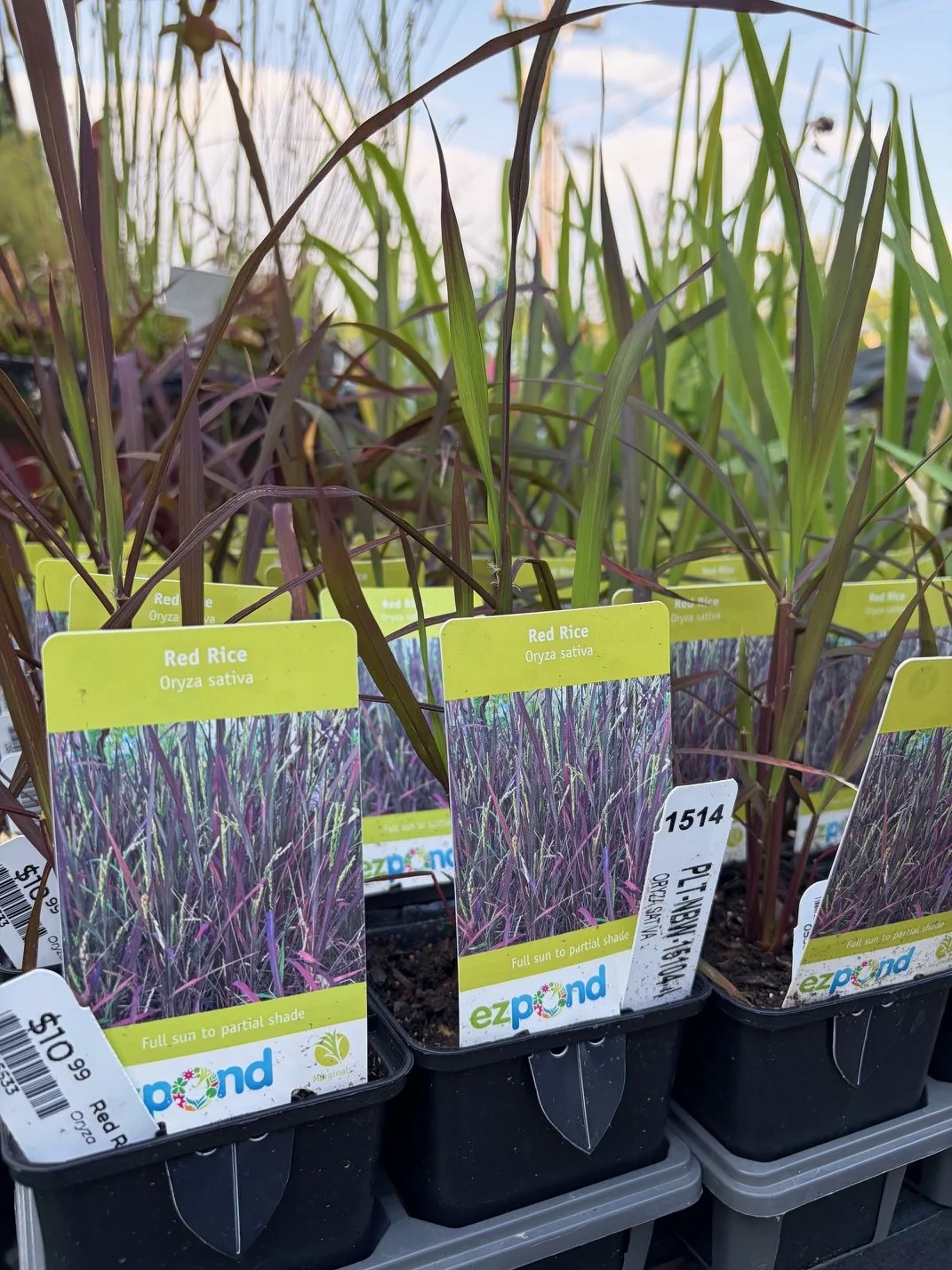
Oryza sativa (Red Rice)
Type: Annual grass
Height: 2–4 ft
Light: Full sun
Water: Shallow water to wet soil
Highlights: Unique edible/ornamental grain; grassy texture
Best Use: Educational displays, edible water gardens
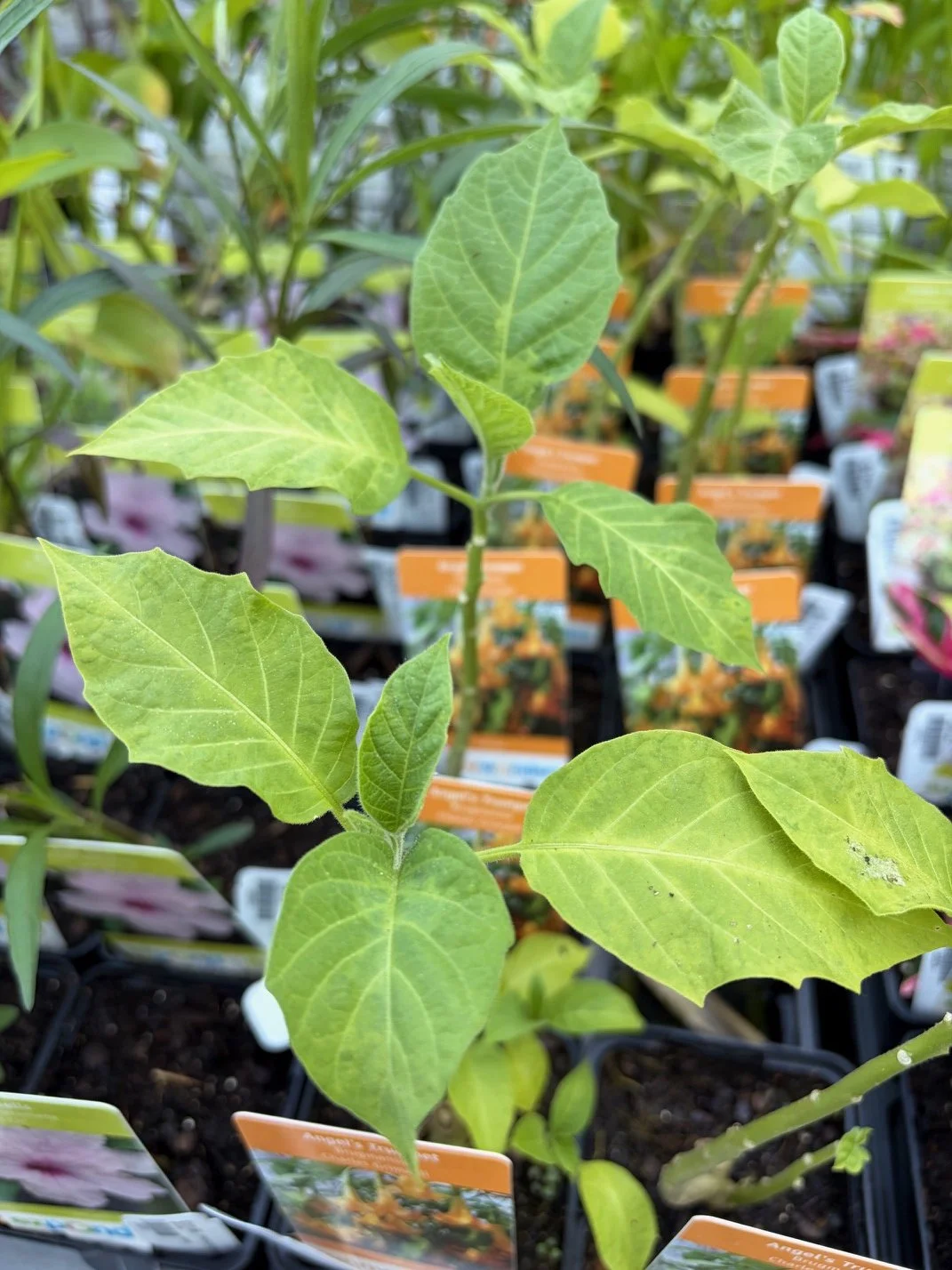
Brugmansia 'Charles Grimaldi' (Angel's Trumpet)
Type: Tropical shrub
Height: 6–10 ft
Light: Full sun
Water: Heavy water feeder (not aquatic but thrives near water)
Highlights: Large, fragrant yellow blooms; dramatic focal point
Best Use: Statement plant near ponds or patios
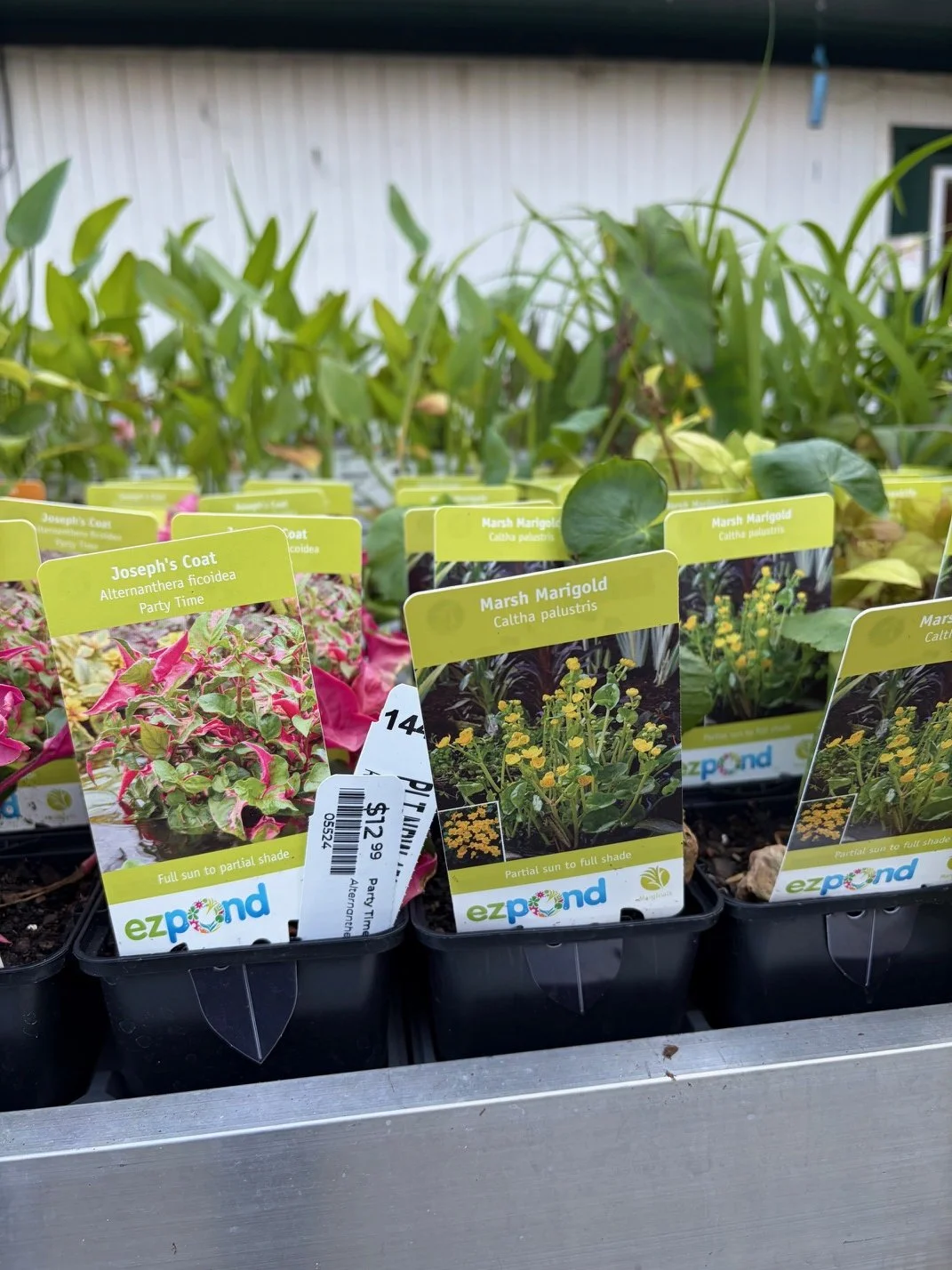
Caltha palustris (Marsh Marigold)
Type: Native marginal perennial
Height: 1–2 ft
Light: Part sun to shade
Water: Shallow water to saturated soil
Highlights: spring yellow blooms; pollinator-friendly
Best Use: Naturalized ponds, woodland water gardens