

January Plant of the Month: Desert Rose (Adenium obesum)
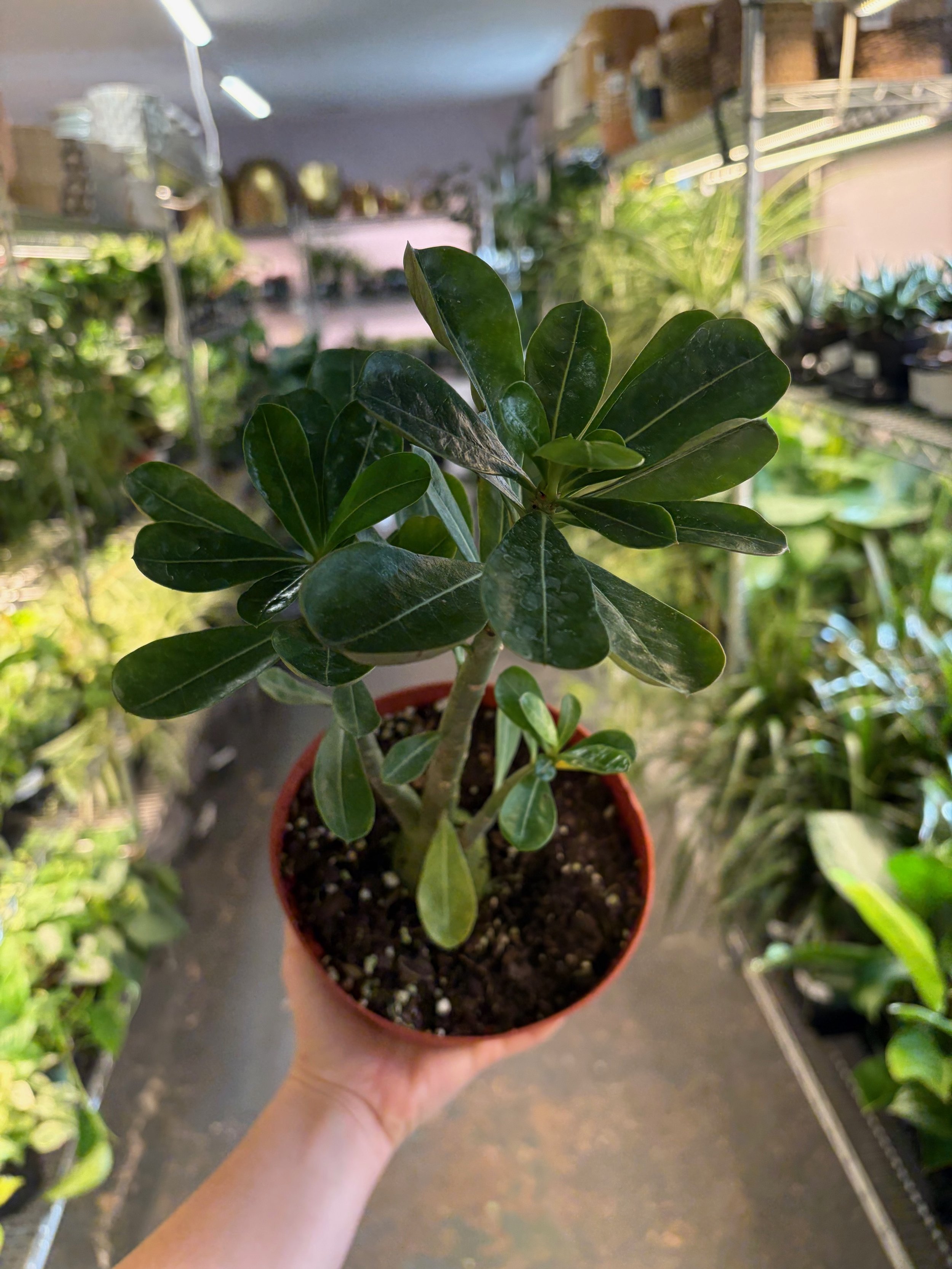
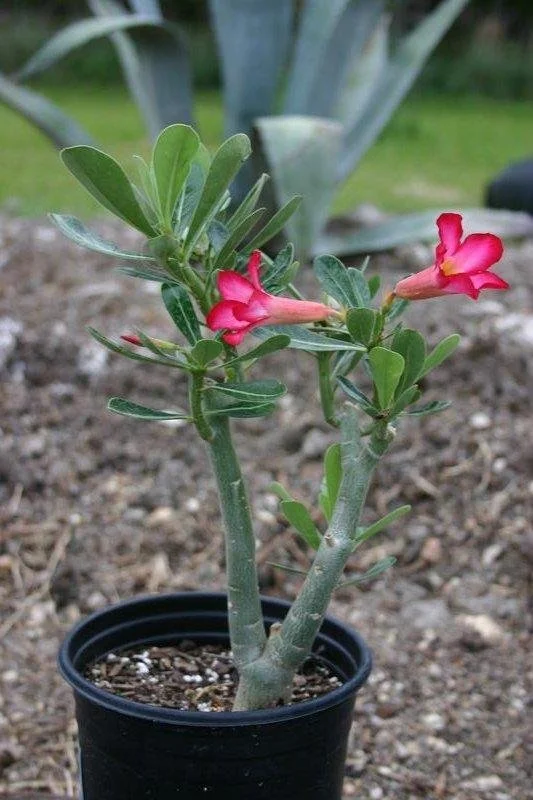
The Desert Rose (Adenium obesum) is a striking plant known for its swollen, sculptural trunk and vibrant, trumpet-shaped flowers. Native to eastern Africa and the Arabian Peninsula, this unique succulent shrub has adapted to thrive in hot, dry conditions by storing water in its thick ‘caudex.’ What’s a caudex? Glad you asked. It’s a plant's thickened, swollen base (stem or rootstock) that stores water and nutrients, allowing it to survive dry periods. Despite its name, it isn’t a true rose, but its blooms are just as showy (see bloom pics below from NCSU toolbox!).

Desert Rose plants love bright, direct sun, which encourages compact growth and frequent flowering. When grown indoors, a sunny south- or west-facing window is ideal. Watering should be done thoughtfully: allow the soil to dry completely between waterings, as overwatering is the most common cause of problems. During cooler months, the plant may enter dormancy and drop its leaves. This is normal and watering should be reduced significantly during this time.
Fast-draining soil is also essential for success. A cactus or succulent mix, often amended with perlite or pumice, helps prevent root rot. Desert Roses prefer warm temperatures and are not frost tolerant, making them best suited for containers that can be moved indoors when temperatures drop in NC. Generally, they are grown as houseplants.
With proper care, Desert Roses can reward growers with long-lasting blooms in shades of pink, red, white, and bicolors. Pruning during active growth encourages branching and more flowers, while seed-grown plants develop the most dramatic caudex over time. It’s also worth noting that all parts of the plant are toxic, so it should be kept out of reach of pets and children.
Whether grown as a bold houseplant, patio specimen, or bonsai-style showpiece, the Desert Rose is a conversation-starting plant that brings desert beauty and sculptural interest to any sunny space!