

December Plant of the Month: Fancy Pansy
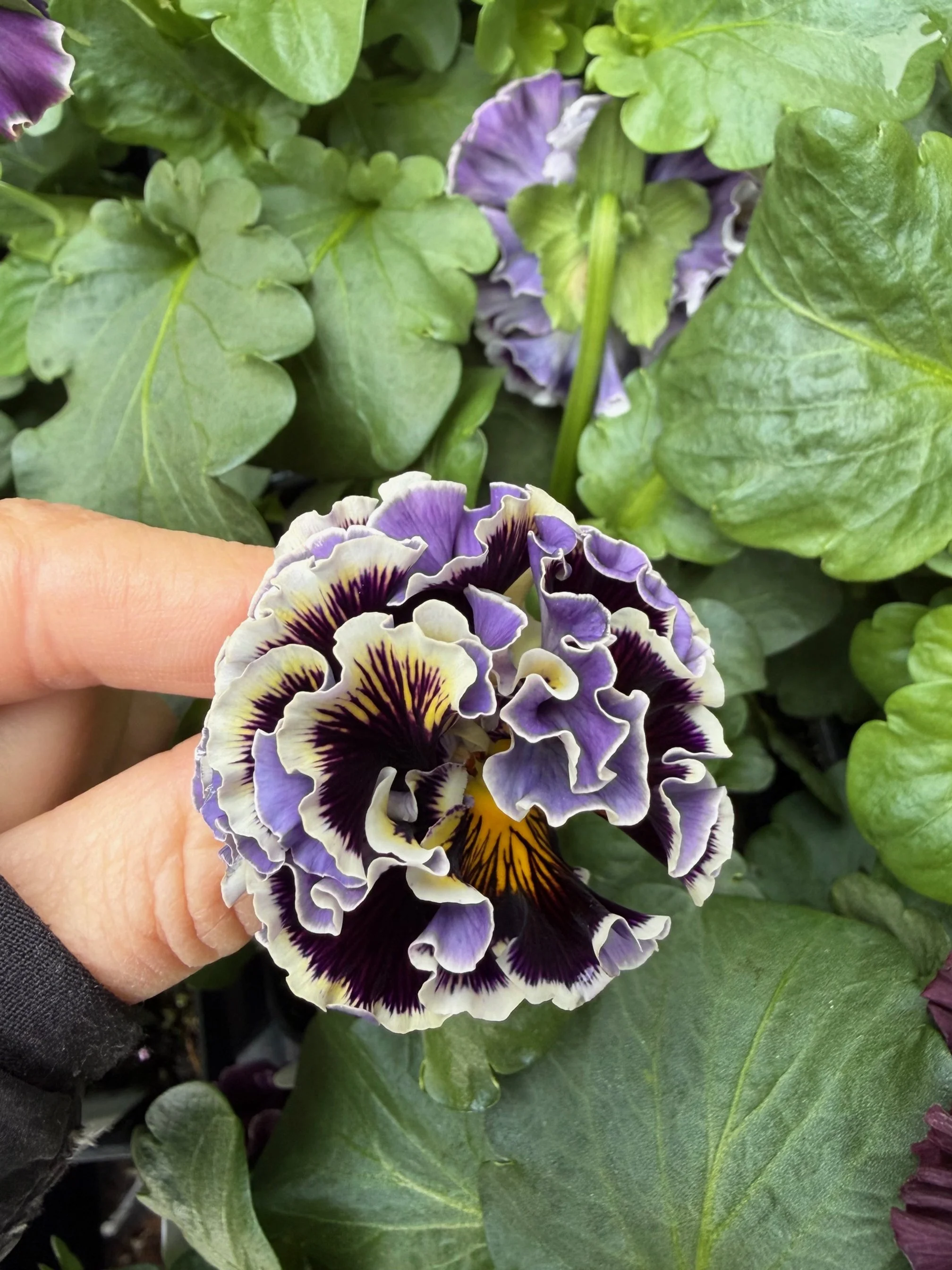
When it comes to colorful, cheerful blooms that brighten up any garden, few flowers can compete with the beloved pansy. Among the many varieties, the Fancy Pansy stands out for its remarkable curled-leaf charm, vibrant colors, and versatility in the landscape. Whether you’re planting containers, borders, or garden beds, this pansy is sure to capture attention.
Ideal Growing Conditions
Traditional Pansies are cool-weather champions and Fancy Pansy is no exception. They thrive in full to partial sun and prefer well-drained, fertile soil. One of the joys of planting Fancy Pansy is its long blooming period. With proper care, these pansies can provide color for many winter months, making them a go-to choice for gardeners who crave continuous blooms.
Tips for Thriving Pansies
Planting: Space plants about 6–8 inches apart to allow for airflow and healthy growth.
Watering: Keep the soil consistently moist, but avoid waterlogging, which can lead to root problems.
Deadheading: Regularly remove spent blooms to encourage new flowers and extend the bloom season.
Fertilizing: Feed every few weeks with a balanced, water-soluble fertilizer to keep flowers vibrant.
Creative Uses
Container gardens
Window boxes
Edging paths
Edible accents
Edible Uses for Pansies
Garnish: Use as a decorative topping for desserts, salads, or cocktails.
Salads: Add whole flowers or petals to green salads for color and flavor.
Desserts: Incorporate them into baked goods like cakes and cookies, or freeze them in ice cubes for drinks (While they’re flavor isn’t super potent, their color adds a nice pop!)
Savory dishes: Sprinkle on top of savory dishes or add to soups for a pop of color.
Candied: Crystallize them with egg whites to create a decorative and edible treat.
Important Considerations for eating: Use pesticide-free pansies that you know have not been sprayed with chemicals. Know that Pansies have a mild, slightly grassy flavor and ALL parts of the flower, including the petals and sepals, are edible