

Winter Pruning Guide
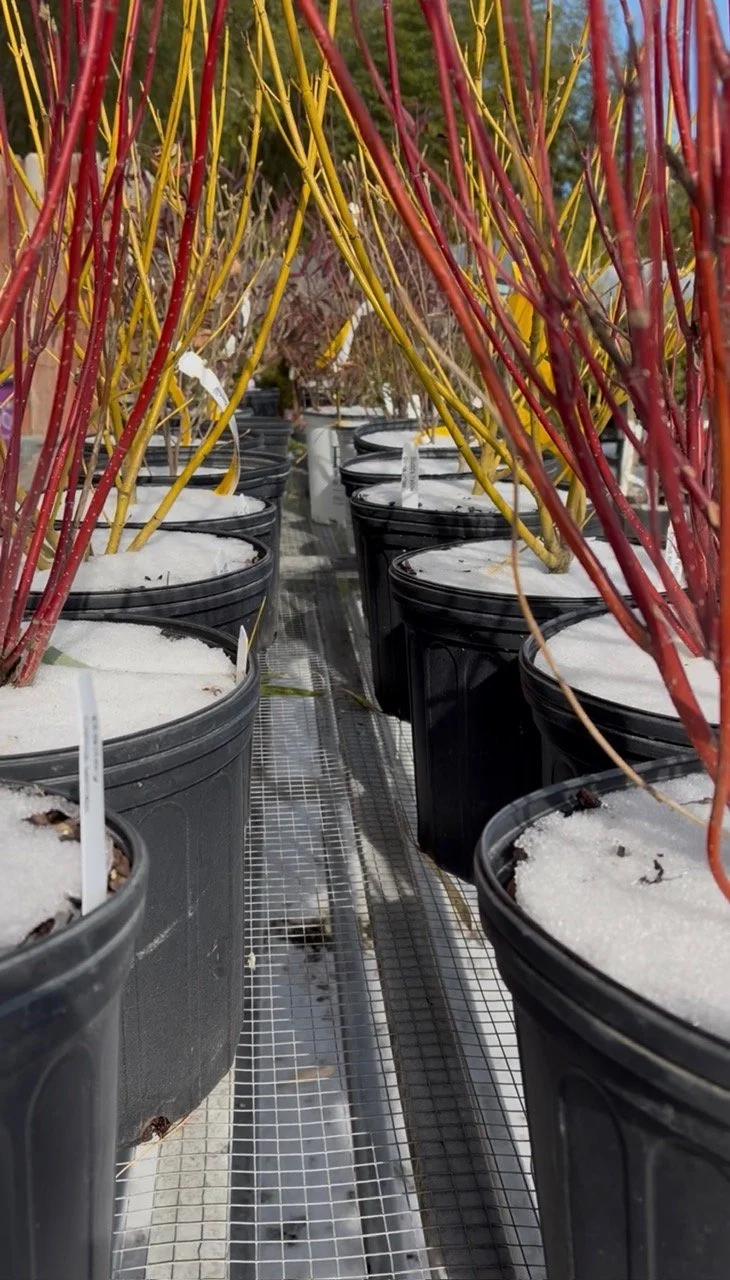
Winter is one of the best times of year to prune many trees and shrubs, but knowing what to cut back and what to leave alone can make all the difference for healthy growth and beautiful blooms in spring. Why winter? This time period is one of best times to prune is because most plants are dormant. With no active growth or leaves in the way, it’s easier to see a plant’s structure and make clean, intentional cuts. Pruning in winter can also encourage strong new growth once warmer weather arrives.
PRO TIP: When you prune, make sure to use sharp clean pruners, cut just above a bud or branch junction, and don’t remove more than 25–30% of a plant at once!
What to Prune in Winter
Deciduous Trees: Trees that lose their leaves in fall are often ideal candidates for winter pruning. Dormant pruning helps shape the tree and remove dead or damaged branches. Examples include maple, oak, birch, dogwood and fruit trees.
Summer-Flowering Shrubs: Shrubs that bloom on new wood (the current season’s growth) can be pruned in late winter without sacrificing flowers. These include Butterfly bush, Rose of Sharon, Panicle hydrangea, and Crape myrtle.
What to Avoid Pruning in Winter
Spring-Flowering Shrubs: Shrubs that bloom early in the season often form their flower buds the previous year. Pruning them in winter can remove those buds and reduce spring blooms. So make sure to avoid pruning Azaleas, Forsythia, Lilac, and Bigleaf hydrangea. Instead, prune these right after they finish flowering.
Evergreens: Most evergreens require minimal pruning and should not be heavily cut back in winter. Harsh cold can damage newly exposed growth. Light trimming is okay, but avoid major shaping until spring.