

March Plant of the Month: Alstroemeria (Peruvian Lily)
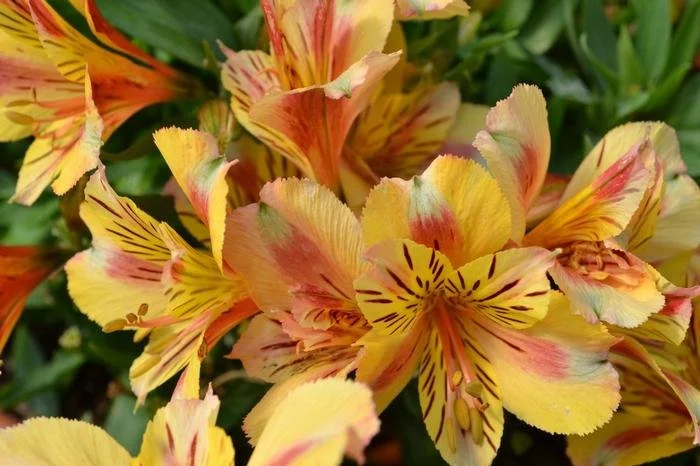
If you’re looking for a plant that delivers long-lasting blooms, vibrant color, and reliability in both gardens and containers, Alstroemeria (commonly called the Peruvian Lily) is a the way to go. This flower symbolizes friendship, devotion, and mutual support. It’s upright stems and long vase life (up to two weeks!) make them especially popular in the cut-flower industry. Alstroemeria is native to South America and in a genus of flowering perennials known for their colorful, trumpet-shaped blooms. Each flower has six petals, often with dramatic streaks or freckles that guide pollinators to nectar. The plant offers numerous varieties in vibrant colors including pinks, oranges, reds, purples, white, yellows and bi-colors. Despite the nickname “Peruvian lily,” they are not true lilies but belong to their own botanical family, Alstroemeriaceae.
Growing Conditions
Sunlight: Full sun to partial shade. In hotter climates, a little afternoon shade can help flowers last longer.
Soil: Rich, well-drained soil is ideal. They dislike soggy roots, so good drainage is important.
Water: Keep soil evenly moist, especially during the growing season. Once established, these perennials are low maintenance year after year.
Hardiness: Most varieties grow as perennials in USDA zones 7–10, though some newer varieties are hardy to zone 6 with protection.
Uses & Pairings
Cut Flowers: Instead of cutting Alstroemeria stems, pull them from the base. Gently tug the stem from the crown and it will encourage the plant to produce even more flowering shoots.
Containers & Borders: Compact cultivars are perfect for patio containers. Save the taller varieties for mixed perennial borders!
Pairs well with: Their upright habit pairs nicely with softer-textured plants like ornamental grasses or trailing annuals.