

October Plant of the Month: Deer Resistant Tulips
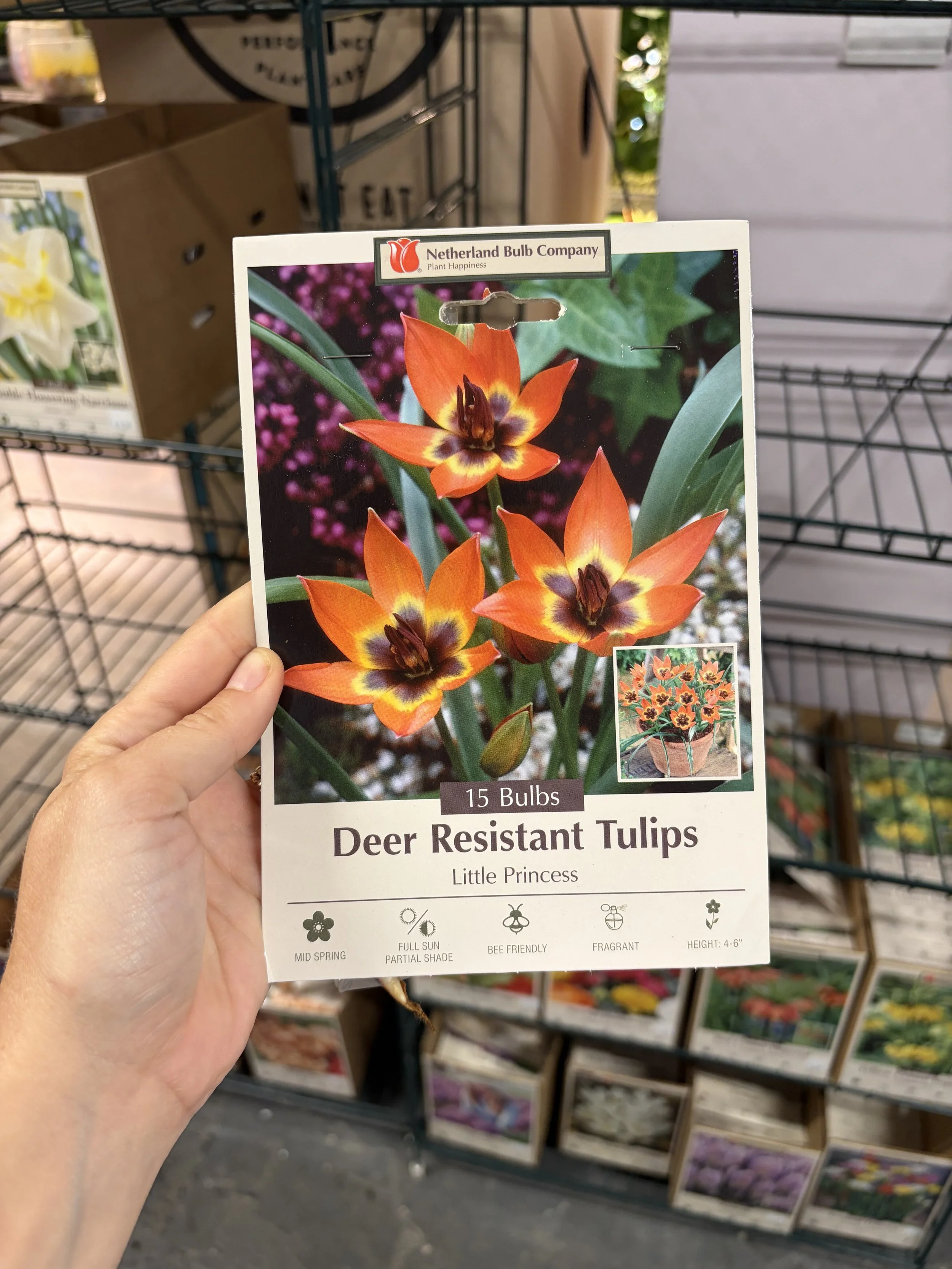
'Little Princess' is a botanical (species-type) tulip. It stands only 4 to 6 inches tall, about a third the height of a typical garden tulip and its star-shaped flowers are coppery orange with a near-black center rimmed in yellow. This tulip holds the Royal Horticultural Society's Award of Garden Merit. Unlike big Dutch hybrids, which often fade after a year or two, botanical tulips are close to their wild ancestors. In sun and sharp drainage they return reliably and slowly spread. So why do deer tend to pass it by?
Deer love ordinary tulips. A Utah State University study found mule deer browsed tulips more heavily than almost any other spring bulb tested. Small species tulips have a much better track record, and gardeners in deer country often switch to them. No study has tested 'Little Princess' by name, but several traits plausibly explain why it fares better.
The first reason is simple economics. A deer browses for the biggest, most tender bite per step. A hybrid offers a fat bud on a tall stem, while 'Little Princess' offers a mouthful barely worth bending for. Its foliage is tougher, too, carrying a waxy, bluish bloom, and coarse or coated leaves are generally less palatable to deer than soft new growth. Its size works in its favor as well. At ankle height, it sits below a deer's natural browse line and is easily overlooked in a rock garden or among other low plants. Finally, there may be a chemical factor. Tulips contain bitter defensive compounds called tulipalins, and hybrid breeding favored size and color over defense, so wild-type tulips may not have been softened in the same way. That last point is a reasonable explanation rather than a proven one.
Planting & Care
Plant in fall, from September through November, in our area before the ground freezes.
Pick a sunny, well-drained spot. Full sun gives the best color and the strongest return. Soggy soil is the main thing that kills species tulips.
Plant 3–4 inches deep, 2–3 inches apart. Set bulbs pointy end up, in clusters of 10 or more for impact
Water once after planting, then leave them to winter rain.
Let the foliage ripen. After bloom, leave the leaves until they yellow, so the bulb can store energy for next year.
Keep summers dry. These bulbs come from dry hillsides and rest best in dry summer soil. Avoid planting under irrigated lawn or annual beds.
No fertilizer is required. A little compost at planting is enough. In happy spots, clumps thicken year after year.