

September Plant of the Month: Anise Hyssop
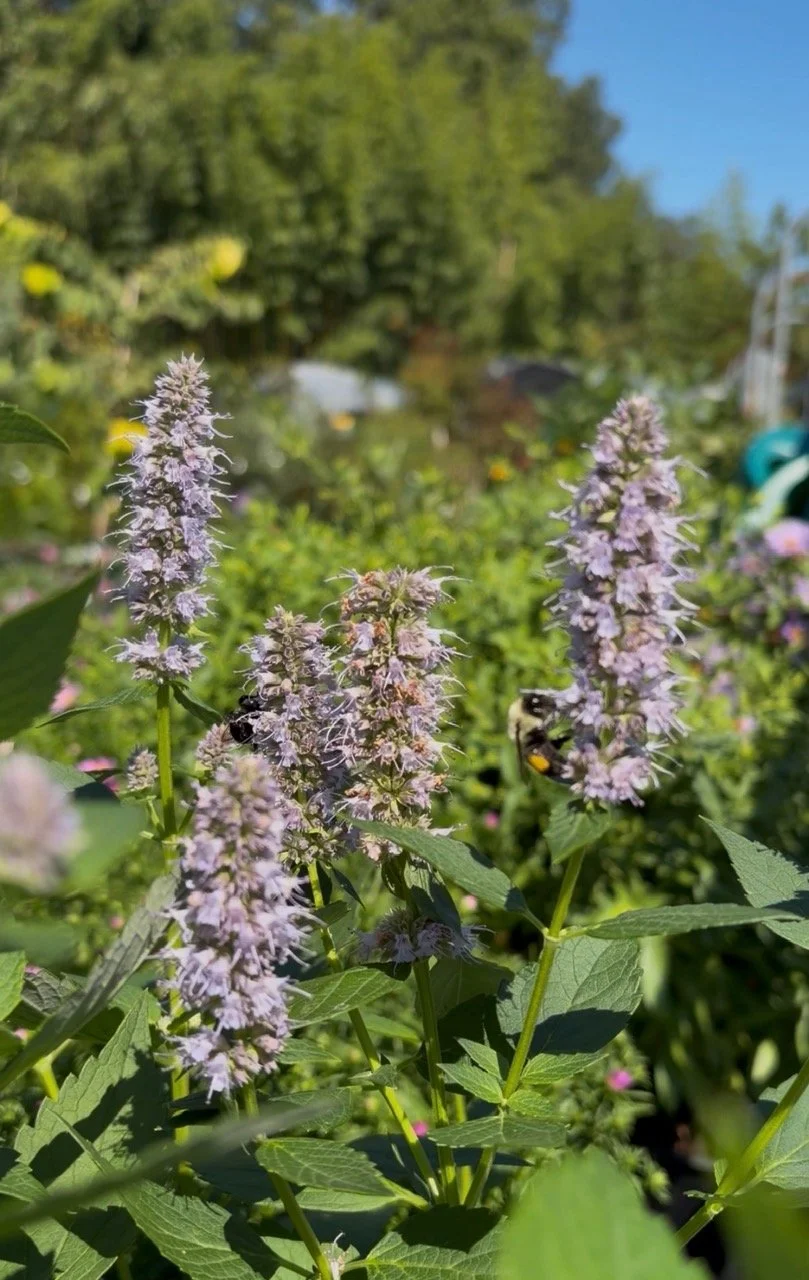
Anise is one of our most sought after herbaceous perennials at the garden center. We always have it in stock and it always gets purchased up quickly! despite the name, it isn’t related to true hyssop. Rather, it’s a member of the mint family, native to the prairies and open woodlands of central and northern North America. The leaves smell like licorice with a faint mintiness underneath.
Its mature size reaches 2-4 feet tall and 1-3 feet wide, with blooms from early summer through early fall.The lavender-blue spikes are an absolute pollinator magnet. We never see them without bees covering the blooms. Anise hyssop is refreshingly low-maintenance, which is part of why it’s become a staple in both pollinator and drought tolerant gardens. It wants full sun for the best flowering and the sturdiest, least floppy growth, though it will tolerate a few hours of afternoon shade, especially in hotter climates. Soil is rarely a dealbreaker. It prefers well-drained, average fertility soil and actually performs poorly in rich, heavily amended beds, where it can grow leggy and weak-stemmed. Good drainage matters far more than fertility, particularly through winter as soggy roots are the most common way to lose this plant. It spreads by both self-seeding and, in favorable conditions, short rhizomes, so expect volunteer seedlings to show up nearby each spring. That reseeding habit means a planting tends to persist and even expand over the years, even though any individual plant may only live three to five years.
Beyond pollinators and being low maintenance, anise hyssop is deer and rabbit resistant (thanks to its aromatic foliage), is great for erosion control on slopes, lovely as a cut flower, and offers seed heads to birds in winter (especially finches). In the landscape, it’s typically used in cottage gardens, native plant gardens, cutting gardens, Xeriscaping (low water beds), and herb gardens. Wondering how you can use it in the kitchen? Try these ideas below!
Herbal tea: steep fresh or dried leaves for a naturally sweet, licorice-scented infusion.
Baking: finely chopped leaves work well in cookies, cakes, and muffins, echoing the way you'd use anise seed or fennel.
Fruit salads and desserts: the flavor pairs particularly well with berries, stone fruit, and citrus.
Infused syrups and cocktails: steep leaves or flowers in simple syrup for a licorice-forward sweetener in lemonade, cocktails, or sparkling water.
Honey: bees that forage heavily on anise hyssop produce a notably fragrant, mild honey, so beekeepers sometimes plant it specifically for that purpose.