

Bigger and Better Tomato Harvest
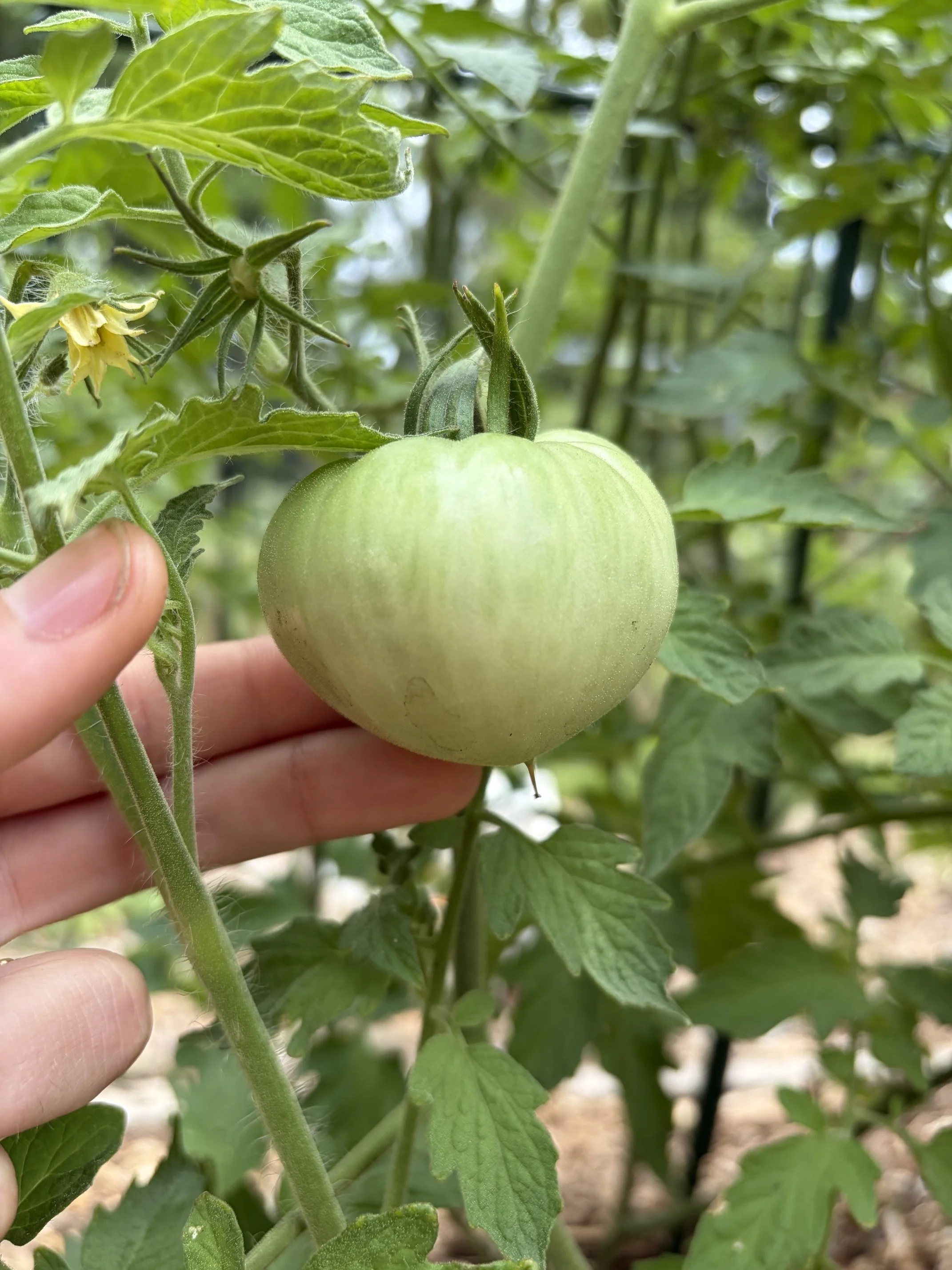
Tomatoes are one of those crops that reward attention. Give them the right start, steady care, and a little discipline on fertilizing and watering, and they’ll go from “a few decent fruits” to buckets of peak-summer abundance. We’re fully into summer now and assuming you’ve already added rich compost, transplanted tomato stems deeply, and made sure they have a few feet of separation for good airflow, there’s still lots of care required to increase your tomato quality and yield.
Watering
Inconsistent watering is one of the biggest causes of cracked fruit, blossom end rot, and poor production. Best practices for tomato watering include 2 times DEEPLY per week (or more in extreme heat). Watering less frequently but deeper/longer encourages deep root growth. Always water the base and not overhead to minimize foliage getting wet. To help hold in moisture and keep temperature stable, consider adding straw, leaves or mulch.
Soil splash is one of the biggest disease carriers. If you’re unable to install drip irrigation directly to the roots, make sure to remove lower leaves and hand water close to the roots to prevent splash.
Feeding
Don’t overdo the nitrogen! Tomatoes need a balance of nutrients and while nitrogen is helpful early on for lush leaves, now it’s time to promote your fruit. After flowering begins, switch fertilizers to high Phosphorus (fruit development) and Potassium (flavor and fruit quality). Look for products that say things like ‘Tomato & Vegetable fertilizer’ or NPK rations such as 5-10-10 or 3-4-6 (equally balanced) and feed every 2-3 weeks during active growth. Other fertilizers that help promote phosphorus and potassium include garden lime, crushed eggshells, gypsum and bone meal.
Support
A well supported tomato plant produces more because a structure changes the plant’s energy balance, health, and growing conditions in ways that favor fruiting instead of fighting damage and disease. Ways to support:
-Staking is best for individual indeterminate tomato plants. Drive the stakes 12’’ into the soil directly next to the plant and tie stems every 8-12’’.
-Cages are best for low growing, bushier and determinate varieties. Tall tomato plants don’t do well with these and often outgrow cages.
-Florida Weave trellising is ideal for kitchen gardens, high productivity rows, and multiple plants. Place stakes every 4-5 feet and tomato plants in between. Run twine back and forth between plants for every 8-10’’ of growth.
Pruning
For indeterminate tomatoes (meaning they continuously produce all summer instead of all at once), remove the suckers so that the plant can focus energy on the main stems for larger fruit. Suckers are the shoots between the main stem and branches. Continuously pruning yellow lower leaves and diseased foliage also help the plant focus its energy and improve airflow.
Prevention
Blossom end rot is not a disease. It’s a calcium uptake issue caused by inconsistent watering. To prevent this, keep soil moisture steady, mulch heavily, and avoid over fertilizing with nitrogen. Ensure the soil has available calcium which can be added through lime or gypsum.
Other ways to prevent tomato disease are to ensure good airflow (plant a couple feet apart), rotate where you plant your tomatoes every year, and make sure your foliage doesn’t touch the ground OR water.
Pollination
Tomatoes are primarily self-pollinating (don’t need another tomato plant nearby) because each tomato flower contains both male and female parts. However, the pollen is heavy and requires movement (such as wind or vibrating insects) to fall into place. To increase yield, gently shake plants or tap flowers every few days and encourage pollinators to your garden by planting pollinator friendly plants!