

Battling Japanese Beetles
Japanese beetles are one of the most frustrating summer pests in North Carolina gardens. They arrive just as roses bloom, grapes ripen, and favorite perennials hit their stride. Before long, leaves are skeletonized, flowers are chewed, and gardeners are wondering if they'll ever win the battle. The good news? You don't have to rely on harsh chemicals or wage war alone. A combination of clever tricks, strategic planting, and a little persistence can dramatically reduce beetle damage while keeping your garden healthy and pollinator-friendly. Here are some creative ideas for reducing Japanese Beetles in your garden:
1. Host a "Beetle Breakfast"
It may sound strange, but one of the most effective methods is also the simplest: hand-picking. Japanese beetles are sluggish in the cool morning hours. Fill a bucket with water and a squirt of dish soap, then gently knock the beetles into it. Japanese beetles release pheromones that attract even more beetles. Removing the first arrivals early can prevent a full-scale invasion. This strategy works best on Roses, Hibiscus, Crape myrtles, Grapes, Zinnias
2. Grow Plants They Hate
Think of this as strategic landscaping. Mix less-favored plants among beetle magnets to reduce the visual buffet. Japanese beetles tend to avoid: Catmint, Lavender, Boxwood, Dusty Miller, Lamb's Ear, Yarrow, Marigolds, Russian Sage, Ferns, Magnolia trees
3. Fight Bugs With Bugs
North Carolina gardeners have some allies including beneficial nematodes and Milky Spore. Nematodes are microscopic organisms that attack Japanese beetle grubs living in the soil. You can apply them late summer through early fall when soil temps are warm and on moist soil just after watering. Nematodes are especially useful if you've noticed large patches of beetles year after year.
Milky spore, on the other hand, is a naturally occurring bacterium that infects Japanese beetle grubs. The catch? It's a long game. It may take 2–5 years to establish, but once it does, it can provide long-lasting control with minimal effort. Unlike sprays that kill adult beetles for a few days, milky spore works underground by targeting the grub stage and can remain active in the soil for many years. Milky Spore is sold in two forms: powder (highest concentration but more labor intensive and granules (faster/more expensive).
4. Turn Your Chickens Into Garden Security
If you keep backyard chickens, this is their moment! Allow chickens to forage in late summer when grubs are near the soil surface and around beds during supervised garden time. Consider planting your grape vines to crawl up and over chicken coops (provides shade for chickens too!) then shake your vines every morning so the beetles fall in for chicken breakfast. Fruit trees are also Japanese Beetle magnets and a great thing to plant OVER a chicken coop to shake daily into the coop.
Train your chickens to love beetles! Chickens are naturally curious and quickly develop a taste for Japanese beetles. To start the training, try hand-feeding a few beetles to your chickens, toss them into their run then let them watch you shake beetles from a plant. Before long, many chickens will eagerly chase them, dig them up in your lawn and aerate/fertilize all at the same time.
5. Create a Beetle-Drop Water Garden
Position susceptible plants near a pond. When beetles gather, gently shake the branches. Many will tumble into the water where fish and frogs can eat them. You can also place a flat rock or decorative birdbath beside your pond. Since Japanese beetles often gather on warm surfaces before flying off, this makes your morning patrol easy. Brush beetles from the rock into the pond and allow fish and frogs to take care of the rest.
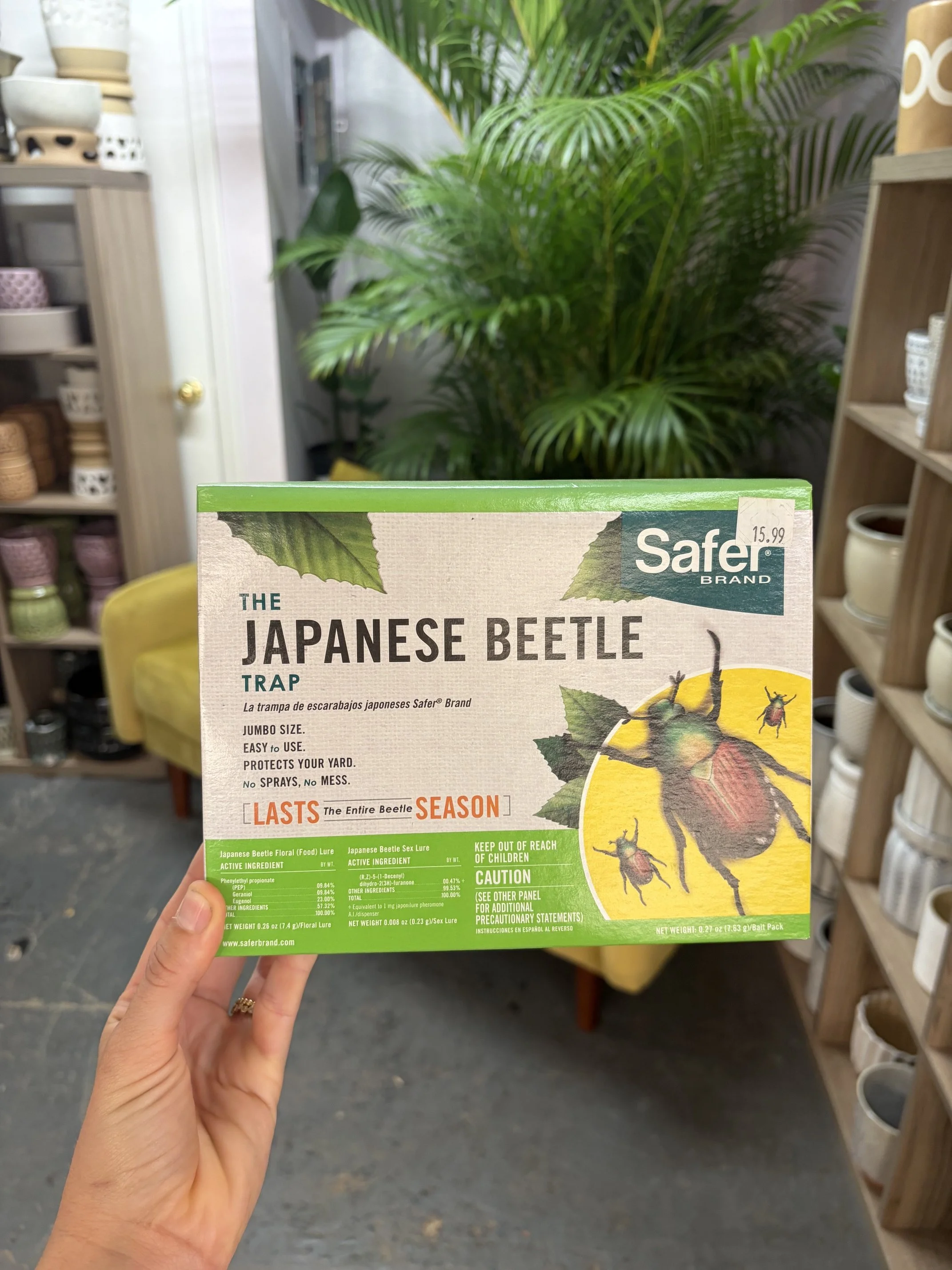
If you choose to buy one of our beetle traps in store, consider hanging it OVER your pond instead of adding the bag beneath it! Beetles will drop from the trap straight to your fish.