

July Plant of the Month: Madagascar Palm
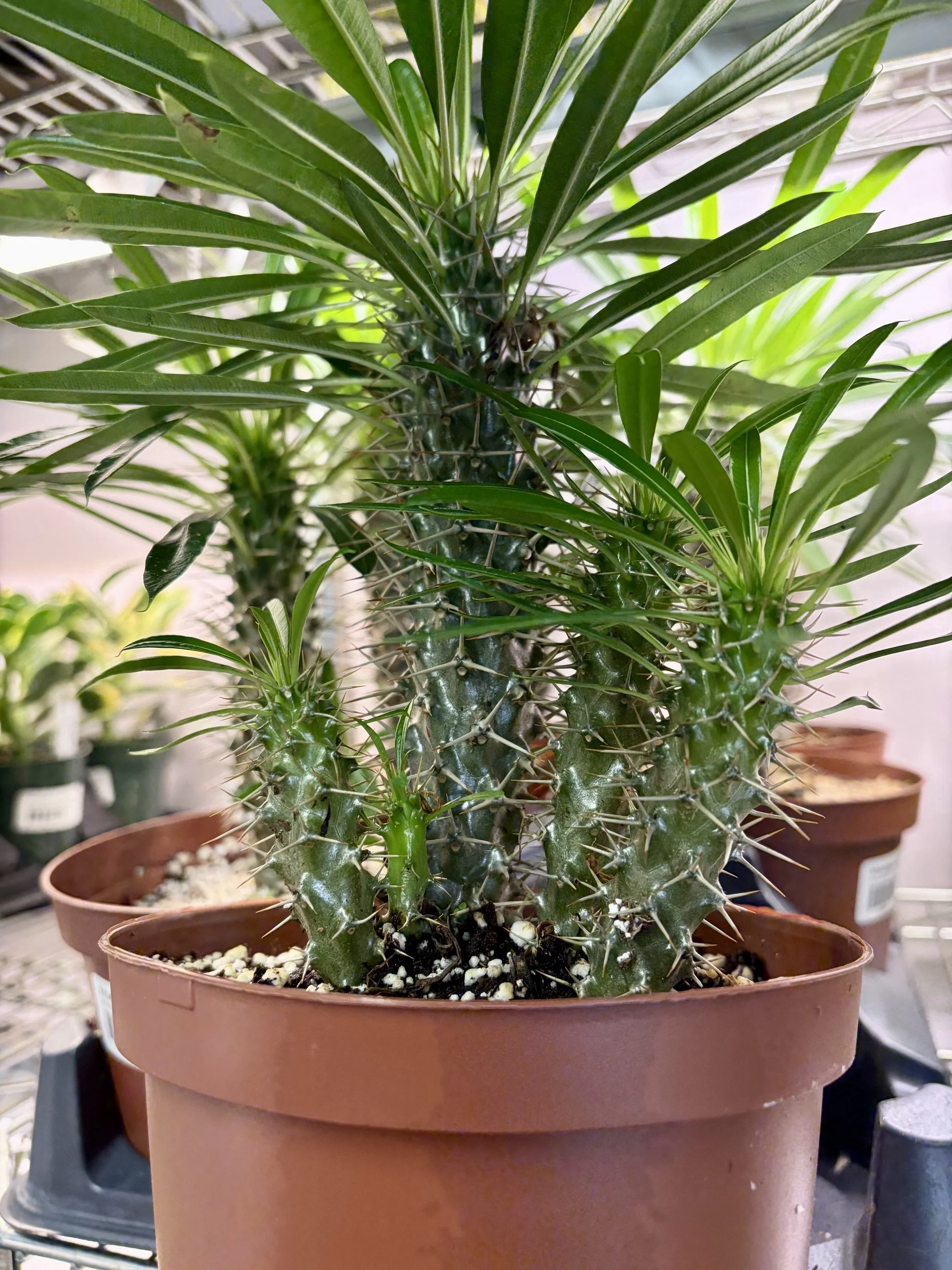
Despite the name, the Madagascar palm (Pachypodium lamerei) isn't a palm at all. It's a succulent. That misdirection turns out to be useful information for anyone growing one indoors, because it means this plant behaves nothing like the tropical palms that it resembles. It wants to be treated like a cactus, not a fern!
Native to Madagascar, Pachypodium lamerei has a thick, spine-covered trunk ( keep away from children and pets!) that stores water and glossy green leaves that only appear near the top. This gives it the palm-like silhouette that earns its common name. In its native habitat, it can grow into a small tree over 20 feet tall, but as a houseplant it typically stays in the 2-6 foot range, growing slowly over many years.
Light and Water: Madagascar palms want as much bright light as you can give them. A south or west-facing window is ideal. Without enough light, the plant will stretch, grow leggy, and lose the compact form that makes it attractive. These plants also do really well with moving outdoors in the summer but make sure to do so gradually (more on moving outside here)! A common mistake when caring for these houseplants in overwatering. The swollen trunk is a water-storage organ, much like a cactus, so the plant is built to handle drought and struggles with consistently wet soil far more than it struggles with neglect. So water thoroughly but infrequently.
Soil and Feeding: Use a fast-draining cactus or succulent mix or amend regular potting soil with perlite or coarse sand. Terracotta pots are a good match since they wick away excess moisture. As for food, feed with a diluted and balanced fertilize roughly once a month during the growing season and skip entirely in the winter.
Common issues: Yellowing or dropped leaves are often a response to overwatering, cold drafts, or a big change in light. Soft, mushy trunks are a sign of rot, usually from overwatering or poor drainage. And leggy growth is due to a light problem so move it somewhere brighter! Don’t stress about leaf drop in winter. This is normal.